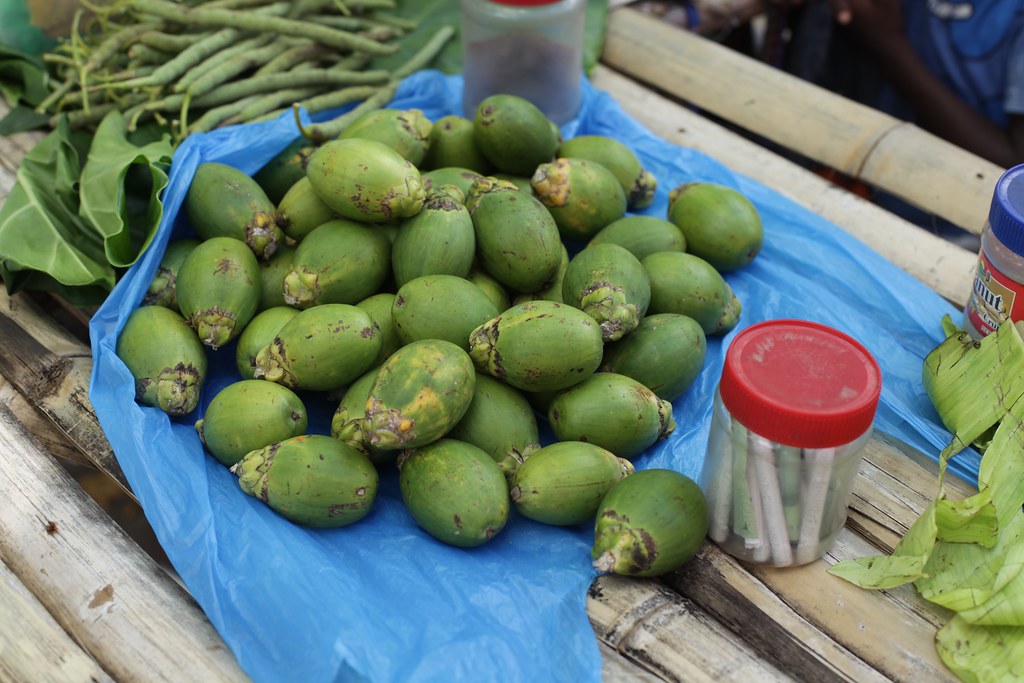
Betel seed, commonly referred to as Betel nut, stands as the nut of the Areca tree palm and holds an essential function in the custom and economy of various Asian regions. The seed is masticated for its exhilarating effects, specifically when paired with betel leaf (a combination of betel leaves and slaked lime) or tobacco. Indonesia as a country, being one of the main producers of Areca palm seeds, has developed into a major participant in the worldwide distribution system for this commodity.
Throughout the Indonesian archipelago, masticating Areca seed, referred to locally as “sirih pinang,” has a long tradition. It commonly utilized in ceremonies, social gatherings, and medicinal practices. Across rural areas, especially in Sumatran regions, the island of Kalimantan, and Sulawesi, the tradition of consuming betel seed continues to be firmly entrenched. The Areca carries a symbolic and cultural role, frequently functioning as a sign of welcoming or incorporated in cultural rites, like nuptials.
Economically, growing betel nuts offers livelihoods for numerous small-scale farmers, primarily in locations like the Aceh region, the province of West Sumatra, and North Sulawesi. For local communities, betel nut serves as a vital cash crop, increasing their financial means and occupying a key role in community economies.
Indonesia’s warm, tropical conditions, nutrient-dense soil, and extensive coastlines create the ideal environment for Areca trees to thrive. The cultivation process follows basic steps and requires significant labor, entailing planting seedlings, maintaining palm groves, and harvesting the nuts after approximately five years. Once harvested, the betel seeds are either air-dried, cooked, or cured, based on the tradition of the region and the market demand.
The betel nut business in Indonesia has a multifaceted production chain, comprising small-scale farmers, local traders, distributors, and global shipment companies. In some cases, Areca nuts are distributed unprocessed, but frequently, they are dried to secure a longer shelf life and to satisfy the demands of global customers.
The global demand for betel seed, particularly in countries like India, Pakistan, Taiwan, and different parts of Southeast Asia, has increased in recent times. betel seed is greatly desired in these areas, where chewing it continues to be a longstanding custom, although there is the rising knowledge of its potential health risks. The Indian market is the biggest buyer of Indonesian betel nuts. The Areca nuts are processed in multiple ways, for example whole nuts, split nuts, or as powder, according to the regional preferences. The role of betel nut in preparing traditional paan is still common in the region of India, and betel from Indonesia is commonly favored for its premium quality and availability.
Taiwan functions as another growing market for Areca nuts from Indonesia, where the custom of betel nut consumption is frequently observed, especially among males in provincial zones. Taiwanese traders prefer Areca nuts from Indonesia because of their competitive pricing compared to domestic production. Even with the profitable opportunities of the betel nut industry, local suppliers in Indonesia struggle with several hurdles in growing their market reach and improving their logistics.
Over the past few years, health studies have correlated the consistent consumption of betel nuts with mouth cancers and various health issues, eliciting anxieties about its safety profile. This has caused some regions adopting stricter regulations or in some cases prohibitions on the marketing and chewing of betel nut products. For example, the island of Taiwan has established steps to reduce betel nut chewing because of growing occurrences of mouth cancers. betel nut suppliers in Indonesia, therefore, face the hurdle of navigating these rules while preserving their export markets.
Though the Indonesian betel nut industry is extensive, it is missing standardized quality measures and standard operating procedures. This may result in variability in product quality, which affects its overseas reputation. Certain suppliers have begun implementing more thorough sorting, evaluating, and packaging techniques to ensure consistency, but the industry as a whole still has space for growth.
Similar to many agricultural products, the cultivation of betel nuts creates concerns about forest destruction and environmental decline. In certain areas, Areca plantations have expanded into earlier forest-covered lands, leading to a decrease in biodiversity and disturbance of habitats. Resolving these sustainability challenges is essential for the enduring health of the industry.
Indonesia is definitely not the singular country producing Areca palm seed. Other Southeast Asian states, such as the kingdom of Thailand, Myanmar, and the island nation of Sri Lanka, in addition have prosperous betel nut industries. Indonesian suppliers must maintain competitiveness by guaranteeing premium products, effective supply chains, and competitive pricing to preserve their share of the global market.
Despite the difficulties, the future remains bright for Indonesia’s betel nut industry. The global demand for Areca nut is projected to persist with strength due to the deep-rooted cultural habits of consumers in critical markets. Provided that countries such as India and Taiwan keep to require superior Areca seeds, Indonesian producers are optimally situated to meet this need.
In order to guarantee continued growth, Indonesian Areca nut manufacturers are prioritizing updating their production methods, improving quality management, and exploring additional markets. Some firms are committing to advanced systems and framework to enhance their workflows and enhance operational efficiency. Additionally, there is growing interest in sustainably produced and environmentally friendly products, which could present new opportunities for Indonesian suppliers ready to integrate eco-friendly practices.
The country of Indonesia’s betel nut industry is a substantial factor to both the national and global market. It delivers income to numerous local farmers and meets the appetite of overseas markets, particularly in India and Taiwan. However, obstacles such as health concerns, regulatory challenges, and market competition must be addressed for the industry to succeed in the future. By focusing on environmental sustainability, standards of quality, and new developments, producers of Areca nuts in Indonesia can maintain to play a crucial role in the global logistics.
 Ilmumantap.school.blog